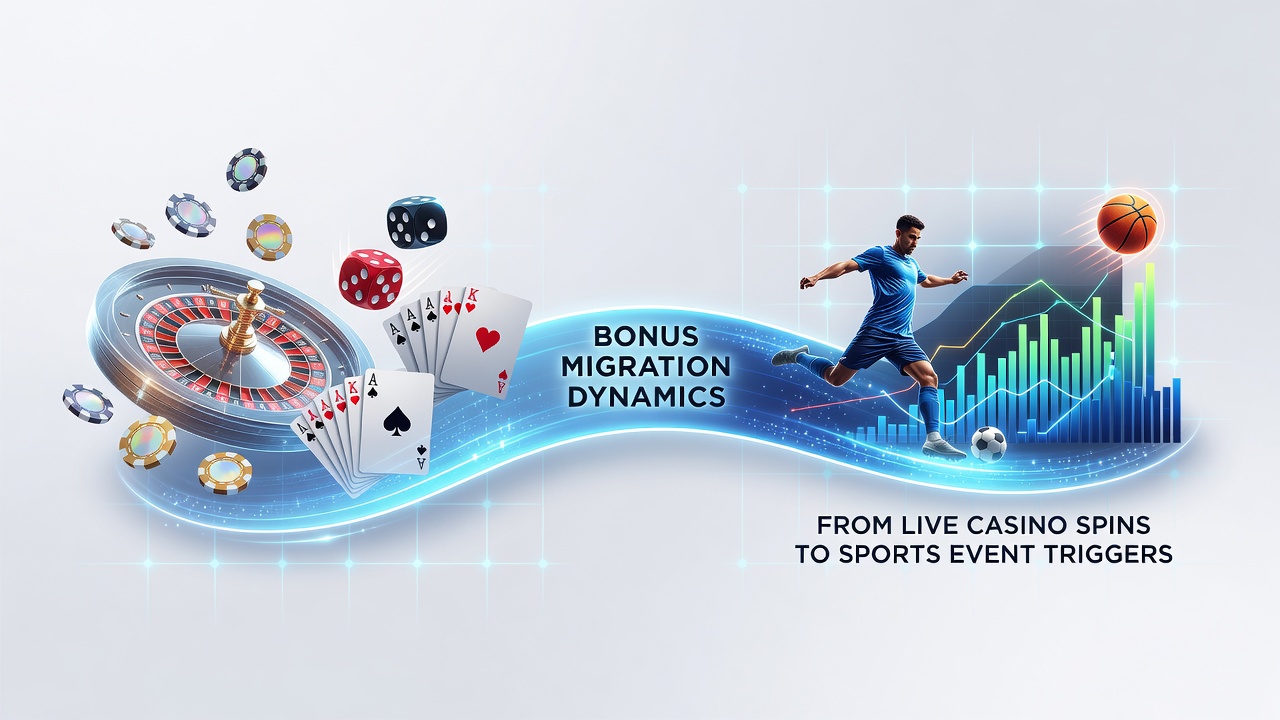
Shifting Incentives: How Bonuses Move from Live Casino Actions to Sports Event Triggers in Integrated Platforms
Integrated gaming applications now route rewards across live dealer sessions and sports event activations through shared account ledgers that update in real time, allowing credits earned during roulette spins to convert into triggers tied to goal scorers or point spreads. Observers note that these systems rely on API connections between casino modules and sportsbook engines, so a completed hand at blackjack can automatically populate a pending sports wager option without requiring separate login steps. Data from platform operators shows that such linkages reduce session abandonment rates while increasing cross-category engagement, particularly when time-limited multipliers apply during major league matches.
Mechanics Behind Cross-Feature Reward Flows
Developers design bonus migration through conditional scripts that monitor both spin outcomes and live event data feeds, converting casino winnings into sports-specific promotions once certain thresholds are met. Researchers at the University of Nevada, Las Vegas have documented how these scripts detect patterns like consecutive wins on live tables and then release equivalent value into event-based betting pools. The process uses encrypted tokens that carry value across modules, ensuring that a player finishing a live blackjack round can apply accumulated credits to an in-play soccer market without manual intervention. Figures released in October 2026 by industry analysts indicated that apps employing these tokens recorded higher average session lengths compared with standalone platforms.
Live Casino Spins as Starting Points
Spins on live casino wheels generate base credits that feed into migration pipelines when combined with sports event metadata, such as upcoming match times or player statistics. Those pipelines activate during high-volume periods like weekend fixtures, where a roulette payout can trigger an additional stake option on tennis sets or basketball quarters. Industry reports from the Australian Institute of Family Studies highlight that seamless transfers depend on synchronized clocks between casino RNG servers and external sports data providers, preventing delays that previously caused users to exit before completing wagers. One documented case involved an app that mapped wheel results directly to basketball three-point triggers, resulting in measurable uptake during evening games.
Sports Event Triggers Receiving Migrated Bonuses
Event triggers in the sportsbook section accept migrated credits by matching them to predefined conditions like goal margins or point totals, drawing value from prior casino activity to extend play. According to findings published by the National Council on Problem Gambling, these connections operate through rule engines that flag eligible accounts and apply bonuses within seconds of a live casino completion. Players often see the transferred amount appear as a highlighted option on the event interface, ready for use on markets such as player props or over-under totals. Platforms that implemented such engines in 2025 reported increased retention during off-peak casino hours, as users moved value forward into live sports windows.
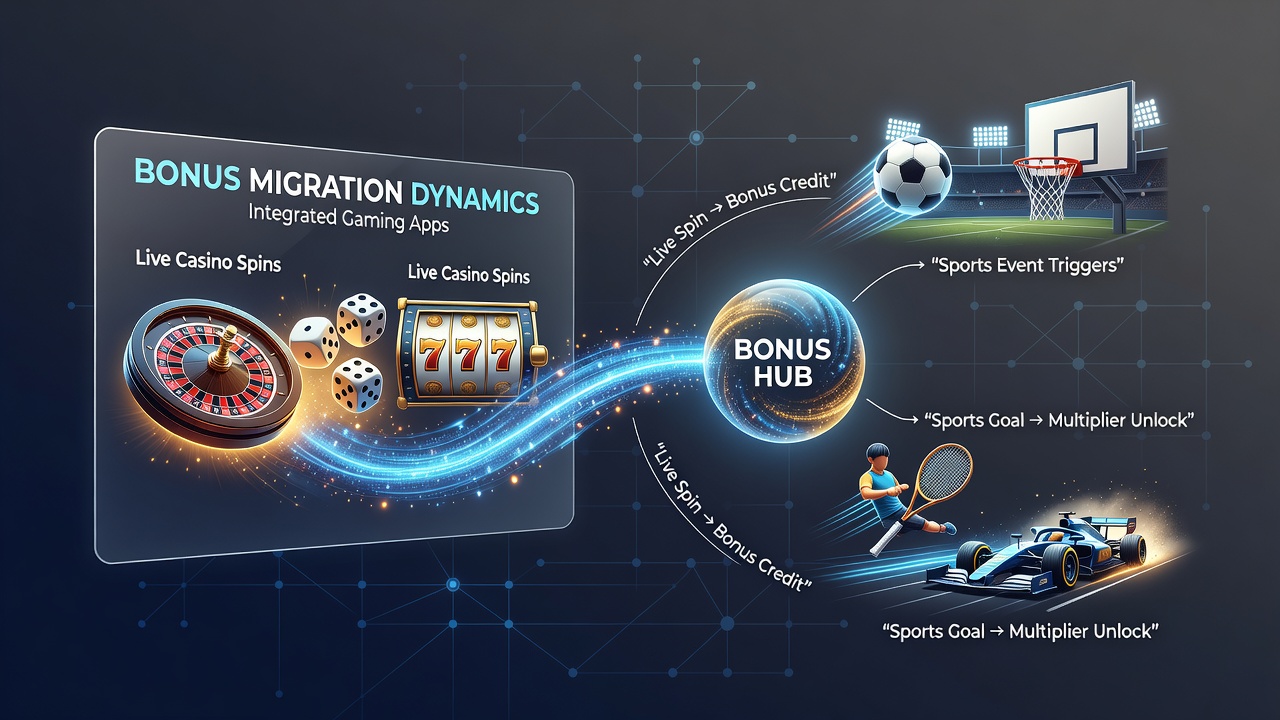
Additional layers appear when multipliers from casino streaks combine with sports event timing, creating compound offers that scale with both spin volume and match progression. Data shared by the European Gaming and Betting Association demonstrates that these layered offers perform best when users remain within a single application rather than switching between separate casino and betting environments. The migration logic checks for active sessions across categories before releasing funds, which reduces friction and supports continuous engagement from table games into pitch-side decisions.
Technical Integration Patterns Observed in 2026
Platform updates throughout 2026 introduced enhanced logging that tracks every credit movement between live dealer interfaces and sports event modules, allowing operators to audit migration paths for compliance. Those updates rely on standardized data schemas that map casino outcomes to sports variables, such as linking card draws to football card markets. Observers from regulatory bodies in Ontario noted that transparent logging helped clarify how bonuses originating in roulette sessions influence subsequent sports wagers without violating jurisdictional limits. The patterns reveal that peak migration activity occurs when major tournaments overlap with extended casino promotions, producing measurable spikes in cross-category activity.
Conclusion
Bonus migration in integrated apps continues to evolve through tighter connections between live casino mechanics and sports event systems, supported by real-time data exchange and token-based value transfer. Reports from multiple regions confirm that these dynamics increase platform stickiness while maintaining distinct category rules. As operators refine the underlying scripts, the pathways from spins to event triggers are expected to expand further, guided by performance metrics gathered across diverse markets.